What is Digital Dentistry?
What is Digital Dentistry?
Digital dentistry is one of the most frequently encountered concepts in recent years. Like in every field, new technologies are being integrated into dentistry as well. So, what does digital dentistry actually bring us?
To explain this concept, we first need to take a closer look at the fundamentals of dentistry. Dentistry generally includes all procedures and surgeries aimed at protecting and improving oral and dental health. However, while doing this, we need to consider each person’s oral and jaw structure, tooth spacing, and measurements in detail.
If a filling is not placed correctly, patients may not be able to chew properly, may experience difficulty in speaking or discomfort in the tongue area while talking or smiling, and may not be able to close their mouth correctly. This can affect jaw structure and also place extra load on other teeth, potentially damaging them. Here we only gave the example of fillings, but dentists deal with much more complex cases as well. For example, in cases where multiple teeth are restored or lost, taking impressions using traditional medium-hard impression materials was necessary to determine the oral and jaw structure and work based on this model. However, during this process, a material with an unpleasant taste had to remain in the patient’s mouth for several minutes. While waiting for it to set, patients could experience discomfort or nausea. After the material hardened, it was removed and used as a model for treatment.
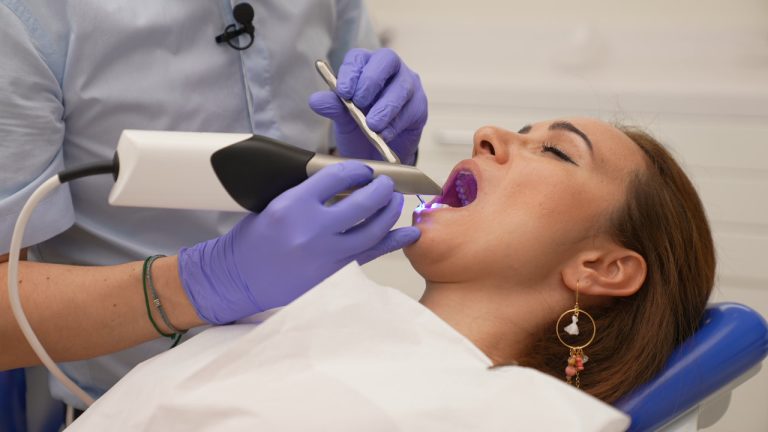
Digital dentistry has made impression-taking much easier for dentists while also turning it into a much more comfortable experience for patients. Moreover, thanks to digitally stored data, patients no longer need to undergo repeated impressions for different treatments; a single scan can be used for multiple procedures.
Digital Dentistry Technologies
Digital dentistry refers to the integration and improvement of traditional dental practices through digital technologies. With this modern approach, dentists and technicians can perform treatments more effectively, quickly, accurately, and in a more patient-friendly way. Digital dentistry offers many advantages compared to traditional methods.
Digital Imaging: Digital X-rays provide faster results, lower radiation exposure, and easier-to-read images compared to traditional film-based X-rays. This helps achieve faster and more accurate diagnoses.
CAD/CAM Technology: Computer-Aided Design (CAD) and Computer-Aided Manufacturing (CAM) systems are used for dental restorations such as crowns, bridges, and veneers. These systems allow precise restorations based on digital data taken from the patient’s mouth.
Intraoral Scanning: Instead of traditional impressions, 3D images of the patient’s mouth are created using digital scanners. This improves patient comfort and speeds up results.
3D Printing: 3D printing technology is used to produce customized dental implants and prosthetics. This enables more precise and cost-effective treatments.
Digital Record Keeping: All patient records, treatment plans, and images are stored digitally, making data access and management easier.
Digital dentistry increases patient satisfaction and speeds up treatment processes. It also helps dentists achieve better results, improves treatment planning, and makes follow-up easier, contributing to better oral health management.
Advantages of Digital Dentistry
- Faster and more efficient treatment processes
- Less pain and discomfort
- Higher patient comfort
- Better diagnosis and treatment planning
- Improved patient education
- Easier communication between dentist and patient
- Easier data storage and tracking
- More precise restorations and prosthetics
Digital dentistry improves the patient experience while allowing dentists to achieve faster and more predictable results.