How to Brush Teeth Correctly?
How to Brush Teeth Correctly?
Why is brushing teeth important?
One of the most important functions of our teeth is chewing, as well as helping us speak and produce sounds correctly. We consume many foods and drinks throughout the day. Our teeth play a very important role in grinding these foods. However, while performing this task, they naturally wear down and become dirty over time.
The mouth, where the teeth are located, is constantly moist due to saliva secretion. This accelerates the spread of bacteria, infections, and fungi. Food and drink residues, bacteria and infections that enter our mouth through breathing or via hands and nails, and genetic factors (such as how acidic saliva is) all contribute to the mouth becoming an environment where millions of bacteria, infections, and fungi can rapidly multiply.
For all these reasons, dentists have been emphasizing oral and dental hygiene for centuries. Otherwise, cavities formed in teeth and gums may, through nerves, lead to the beginning of many health problems in different parts of the body. According to research, oral and dental infections may contribute to heart attack, rheumatism, infertility, miscarriage, and premature birth. In other words, taking care of our health starts with taking care of our oral and dental health.
How is oral and dental hygiene maintained?
The first step in maintaining oral and dental hygiene is proper tooth brushing. Brushing for 2 minutes after breakfast in the morning and after the last food or drink in the evening removes food and drink residues accumulated around the teeth, thus preventing the growth of bacteria, fungi, and infections in the oral environment.
However, in addition to brushing, there are two other important rules for oral care: regular use of dental floss or floss sticks and mouthwash. Using dental floss every evening after brushing helps clean food residues from areas the toothbrush cannot reach, and using mouthwash removes bacteria from the oral environment, preventing cavities during the night when the mouth remains closed.
How are teeth brushed correctly?
- Choose an appropriate toothbrush: Choose a soft or medium-bristled toothbrush that fits comfortably in your mouth according to gum sensitivity.
- Apply toothpaste: Squeeze a pea-sized amount of fluoride toothpaste onto your toothbrush. Fluoride helps prevent tooth decay and strengthens tooth enamel.
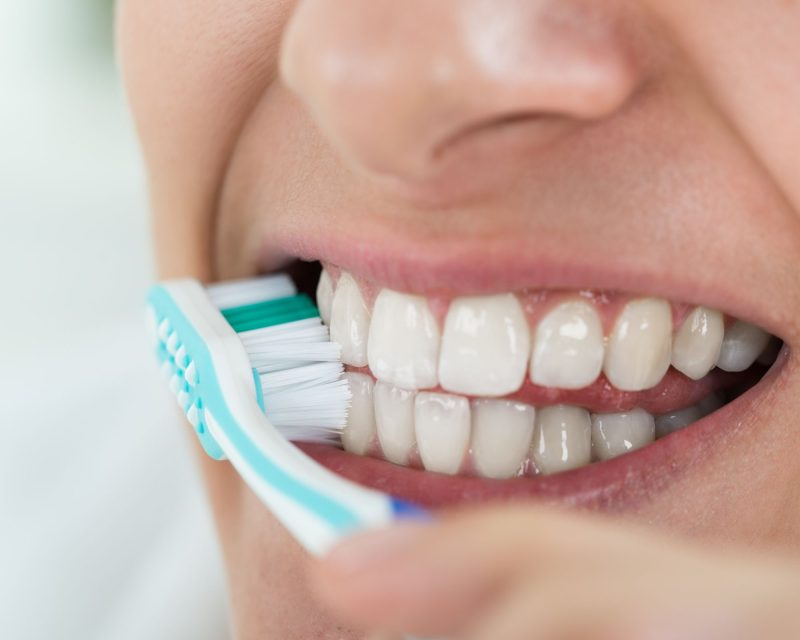
- Hold your toothbrush correctly: Hold your toothbrush at a 45-degree angle toward the gum line.
- Brush outer surfaces: Start by brushing the outer surfaces of your teeth. Use short, gentle, back-and-forth or circular motions. Pay attention to each tooth and clean front, back, and chewing surfaces.
- Brush inner surfaces: Adjust the angle of your toothbrush to reach the inner surfaces of your teeth. Brush using the same back-and-forth or circular motions.
- Brush chewing surfaces: Clean the chewing surfaces of your teeth using back-and-forth movements. Make sure you cover the entire surface area.
- Clean your tongue: Gently brush your tongue to remove bacteria and freshen your breath.
- Rinse and spit: After brushing for about two minutes, rinse your mouth thoroughly with water. Spit out the excess toothpaste.
- Clean your toothbrush: Rinse your toothbrush with water to remove any remaining toothpaste or debris. Store it upright to air dry.
- Replace your toothbrush regularly: Replace your toothbrush every three to four months or sooner if the bristles are worn.
- Brush at least twice a day: Brush your teeth at least twice a day, ideally in the morning and before going to bed. This helps remove plaque and prevent dental problems.
- Pay attention to floss and mouthwash use.